Tag Archives: books

Do the KDP structure changes make Amazon the enemy?

I have seen much outrage (and confusion) since Amazon announced it was to make changes to the payment structure for books. In case you haven’t heard about it, the Publishers Weekly article goes into detail about it here.

A lot of the criticism seems to come from an initial bout of ‘you’ll only get paid if someone finishes the book’. In fact the statement is as follows:

Under this new model, the amount an author earns will be determined by their share of total pages read rather than their share of total qualified borrows.

At the moment, this also only applies to books that are in the kdp select programme, which pays out a percentage based on those borrows as part of Kindle Unlimited or the Kindle Owners Lending Library. I’m processing how I feel about this, but two obvious things spring to mind.

Firstly, this is potentially the tip of the iceberg that becomes the standard model for all books, irrespective of whether they were purchased outright rather than borrowed. While I know most people who aren’t in the game will assume that this kind of change will only have any real impact on self-published authors, I know there are a lot of books out there that have hit the best seller charts and yet nobody ever actually gets round to finishing or reading.

Secondly, how much data is Amazon actually collecting on people? Number of page reads and the amount of time spent on each one in order for it to actually qualify as being ‘read’ seems like getting down to a level of granularity that is quite off-putting. No lingering or re-reading that favourite sex scene over and over. Big brother is watching you (and now really knows what you like).

As with all change, there are pros and cons. I can see the value of someone who has produced a good, 200 page book being paid more than someone who has churned out a 20 page quickie. However, that does set a dangerous assumption that quality is the same as length, which we all know isn’t true. Get your mind out of the gutter, I’m still talking about books here.

The reality is that Amazon can do largely what it wants, as it is by far the largest retailer of ebooks. Nothing else really comes close. However, that is reliant on people using the kindle as the ereader of choice, and on authors being willing to upload their words. Being the market dominator can change quickly when your customers decide to take a look at those alternatives after all.

Just ask Blackberry.

The End

I’m taking a short break from the final chapter of the second instalment of the Teddie McKay detective series. Now the end is so close, I am at that mix of excitement  combined with the sadness that it is over. There will no doubt be many changes between this version and the one which finally gets published, but there is only ever one true moment of ‘The End’ when writing a book.

Of course, I won’t be able to relish it for long. As soon as I’ve allowed myself a brief moment to celebrate (maybe with a glass of wine), my mind will begin to think other projects. The pull of the bright and shiny new has been strong for a couple of weeks, but I have managed to resist it. You know when the end is near. You start to get a new plot idea roughly every thirty seconds and you are convinced it is the best story since Eve tempted Adam with the apple. When you go back later to those hastily scribbled notes, most of them are rubbish, or absurd, or just plain weird. They were just there to distract you in that moment of weakness to stop you from finishing. Anyone who has read The War of Art knows that feeling of distraction.

(Doing this blogpost is probably exactly the same thing, but at least I know it won’t take up more than thirty minutes of my time. You’re getting the rough and ready content here people. Otherwise the Wordpress time suck will be the death of me.)

Tomorrow morning I will be writing something new. In a completely different genre. My mind may struggle to adjust for a while, but I’m going back to work with some characters I already know well. I’m looking forward to playing with them again. Teddie can go back in her box for a few weeks until I have to do structural edits on her. Which just sounds plain creepy. I assure you it’s not.

Probably.

Do your characters ever refuse to do what you tell them to do?

This is definitely a question for the writers rather than the readers out there.

Sometimes it really does seem like characters are living, breathing entities with a mind of their own.

I’m hands down a planner when it comes to writing, as I’ve frequently discussed. So, on the whole, I’m not waiting for inspiration to strike in order to know what my character is going to do next. I’ve already done that kind of plotting by the time I put the first sentence on the screen. Yet sometimes, despite my best intentions, at certain points in the novel, I find my characters wanting to do something other than what I have intended for them.

Cue a tug of war between me and them. Given that both exist solely in my head, if it wasn’t part of the writing process it would clearly be a psychiatric disorder of some sort.

Some people argue that if the character isn’t completely under your writerly control, then it is merely a symptom of poor planning. I think that can sometimes be the case, but not always. After all, part of the joy of writing is the excitement of finding out what happens next. Even with deep structure and plot points, you never know until you start writing how the words are going to line up on the paper. You don’t know what new influences you will be exposed to as part of the process. After all, for most people it takes at least six months to do a first draft. Sometimes it can take years. It would be foolish to expect not to have changes in perspective during that time.

For me, working on book two of one series and book four of another, the more I go along, the more likely these characters seem to want to play their own game. Perhaps it is because as they become more rounded they become more real. Perhaps it is because that the arc I originally envisaged for them is changing. Or maybe, when you create independent women who you love because they do whatever the hell they want, then sometimes they might just do that right back at you.

I didn’t want the Teddie McKay series to be more romance than cheeky, cheesey crime with some thriller tension thrown in there. Yet, as book two draws to a close, she seems determined to have a some fun. In my head, saying ‘aw come on, how about you let me live a little, huh?’

It might not be in the plan, but you know what? I think I might just let her…

Finishing – It’s Always The Hard Part

This is no ‘how to’ post. You won’t find any handy tips and tricks here. This is just me talking about how finishing is always the most important part of a novel, and that probably makes it the hardest.

As with writing, the same applies with life. The best things are the hardest won. The sense of satisfaction is the most rewarding. Yadda eider eider. Right now, the words ‘The End’ seem to be a moving target. Moving, apparently, further and further into the distance.

Writing is my hobby, my passion, my love. It is also my business. Therefore, it has schedules and deadlines and project plans, just like everything else. True, it may be rooted in creativity and dreams, but as anyone will tell you, it’s hard work that gets you over the line. There is no fantasy lottery win that will free me up to write in that luxury beach villa. Or the cabin on the lake. Insert your location of choice here, alongside whatever your dreams and goals are.

So, logic tells me it will be worth it. However, the child in me wants to stamp my feet and demand to know why my characters are refusing to play ball and be written according to the ideas I had originally. I knew what I needed to write to create the follow up to The Crochet Killer. While I know the new direction will all work out better in the end, it doesn’t stop things from being as frustrating as hell now!

So, when you’re reading this, I sincerely hope you’re having better luck than I am on finishing your dream project! If not, then we can carry on battling through it together!

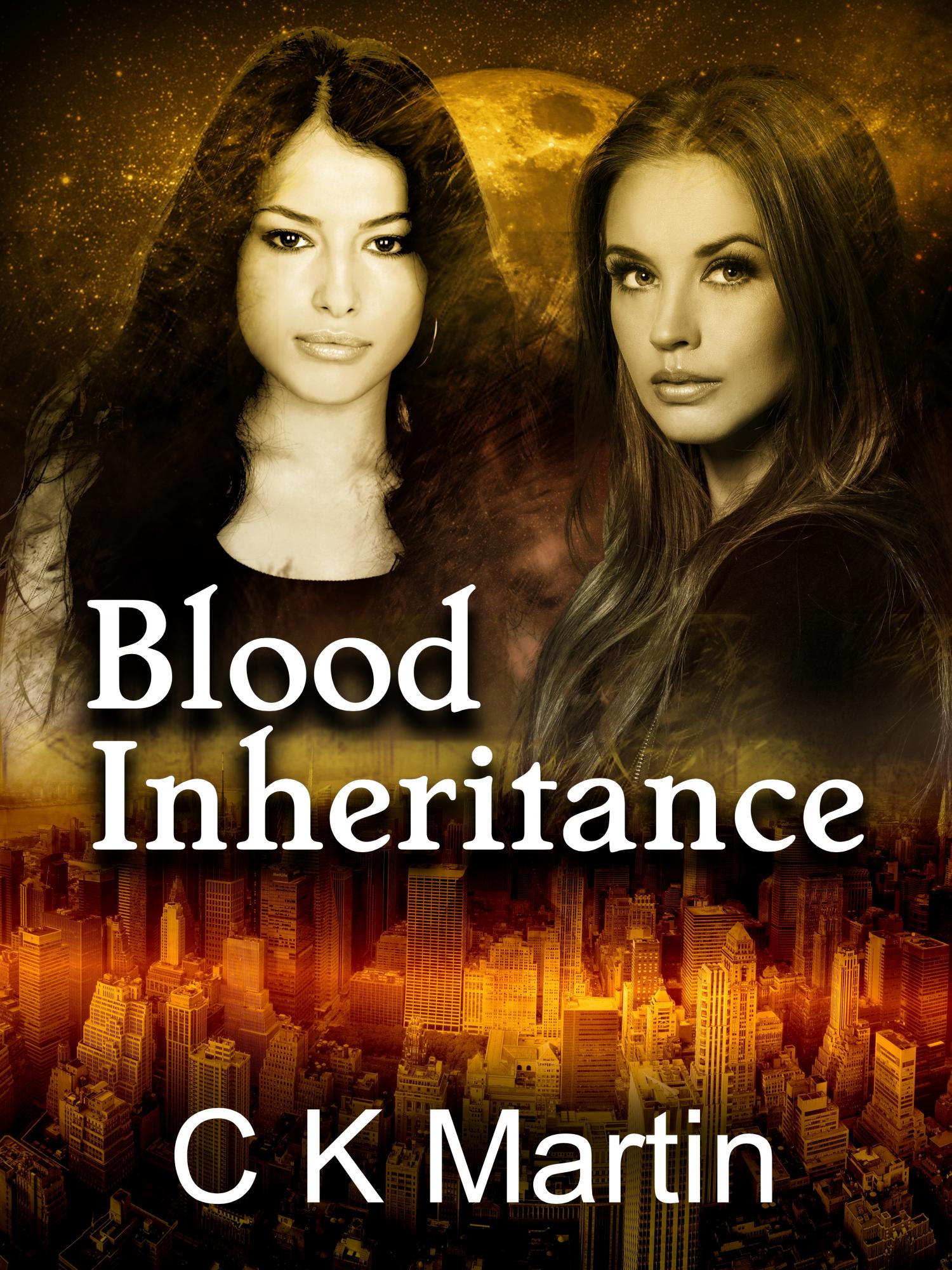
Blood Inheritance

And if you want to read something I did manage to complete, then Blood Inheritance has been released on Amazon. Go grab yourself a copy and make me feel like this is all worthwhile!*


*shameless plug and plea. A writer’s first draft despair knows no bounds.

Subtext vs Queerbaiting: When does one spill over into the other?

This blogpost came out of a conversation with a friend about how badly diversity is handled by some media. Whether in TV, movies or books, there are shining examples and there are terrible examples. Although the conversation was about diversity in general, it was the the fine line between subtext and queerbaiting that seemed the most blurred.

Firstly, whilst subtext can mean all manner of implied content, for the purpose of this post I’m just using it in a sexual / sexuality way. After all, subtext as a technique is essential in all art mediums, otherwise there would be only explicitly stated events. And that would be no fun at all.
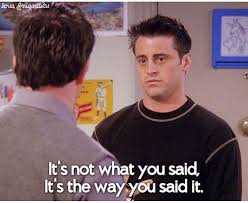
joey quote

Firstly, let’s get some definitions going. Not mine, but stolen from the internet as generally accepted understandings:

Subtext is content underneath the dialogue. Under dialogue, there can be conflict, anger, competition, pride, showing off, or other implicit ideas and emotions. Subtext is the unspoken thoughts and motives of characters—what they really think and believe.

For me, whenever I heard the term queerbaiting, it always seemed to be in anger or thrown around without much thought to what it actually means. So I turned to Wikipedia to found out (if it’s on Wikipedia then it must be true, right?)

Queerbaiting is what happens “when people in the media (usually television/movies) add homoerotic tension between two characters to attract more liberal and queer viewers with the indication of them not ever getting together for real in the show/book/movie”

Now, one of these things sounds significantly worse than the other. One seems normal writing technique, the other seems malicious and cruel. But in the context of sexuality specifically, I’m not sure the difference between the two is as great as it seems. Stick with me here. Because (and I’m going to pull from TV for a second, rather than books), since the late 90s, we see very little has changed. Subtext was the source of great joy in the early days, queerbaiting a source of great anger now. But compare two shows, one from now and the other from back then, and other than the bad hair there is probably very little difference.

It is expectations that have changed. And rightly so.

It used to be that queer audiences were glad for anything they could get. In a world of terrible TV stereotyping, or gays that were essentially called that but were portrayed in a nice, safe, asexual way, some tense subtext between two characters was something to enjoy. A long, soulful glance could launch a thousand fanfics. It still can.

But queer viewers (and generally liberal viewers of all sexualities) no longer expect to be grateful for having someone throw them a bone. Fully rounded queer characters have been portrayed on TV, and in a world where gay marriages are increasing becoming enshrined in law and general social acceptance, it seems almost ludicrous that obvious sexual tension between two characters of the same sex wouldn’t lead to more. Why? Because in the real world, it would.

In the real world, when there is a smouldering sexual tension between two parties, it eventually explodes into something more. Generally after a bottle of tequila. Either that or it becomes confessed to a best friend after a bottle of tequila. Two things remain truth: acknowledgement of said tension and tequila.

The reality is the majority of TV is still written and devised by straight white middle class men. Usually American. Subtext was fine before, so why is it not now? I suspect there is a general mentality of let’s throw this in for the gays, they’ll love it, and then general confusion when they don’t. A lack of understanding of why, in 2015, they might just feel cheated and annoyed. Homosexual self-worth has increased ten-fold and those who have come out the other side of social shame are pulling the teenagers who are struggling right up there with them. Being reliant on subtext feels like going back in the closet, like becoming second class citizens again.

As a writer, I still love me some subtext. I love the freedom it gives for people to create their own imagined ships, whilst understanding that it may not work with the overall intention of the narrative. I completely get that, I really do. Likewise, I love the slow burn of subtext between two characters regardless of sexuality. Castle and Beckett holding out against each other for as long as they did made the payoff even greater. I’d like to think that audiences are smart enough to spot when that’s the case.

The art is understanding the line and knowing when you are about to cross the threshold. When the move goes from fun to offensive. Back to TV – shows like Rizzoli and Isles have come very close to crossing that line, without spilling over into the fury that has been seen with Once Upon A Time. Two very different shows, handled in two very different ways. One is a light-hearted detective show that is only one step up from Diagnosis Murder in its case complexity, with two female leads who are outstanding in their respective fields. It does not frame itself in any other way.

Once, by contrast, sets itself up for confusion: a re-telling of fairy tales (already pretty dark if we’re honest), whilst remaining a family show. It would be hard to reconcile those things at the best of times, but with an almost exclusively white, strongly heterocentric character list who do despicable and brutal things, it fails at both. Creating a convoluted family tree does not equate to a re-telling. Murder does not equate to a family show. Having your characters say one thing but behave in a way that is classic subtext, is no longer ‘just fun’ within the parameters the show has set for itself.

The world has come a long way. I guess that is the key concept I have reached in all of this. That subtext is fine, but context is key. Like all art, at the grand finale, the audience expects a payoff. Books have it much easier, allowing the audience to be privy to the innermost thoughts of the character. TV and movies have to convey much more to compensate for that. It requires a great script, great directing and great acting ability. But people have a right to vote with their fingers: to close the book or to turn off the TV.

People have a right to not enjoy it when something they identify with is being used as a fun plaything for someone else. They have a right to say so. Eventually the world will change more. Eventually, I hope, this blog post will be laughably obsolete as people no longer have to fight for entertainment that is ethnically, socially, sexually diverse. Oh, and don’t forget gender. Wouldn’t it be nice for the virgin/whore trope to be gone forever?

Feel free to agree or disagree, but politeness only in the comments section please!
Writing and motivation: keeping the momentum going

I find the long weekend has been perfect for a little bit of extra introspection time.

I’ve spent the past few months building up to publishing Blood Inheritance, with the crazy planning and scheduling that goes with such a big endeavour. I say that because we should not belittle our achievements. I am terrible at taking time out to celebrate when I hit my goals. I’ve been talking about getting this book out there for the best part of two years, so I’m allowed to high five myself for being brave and letting one of my babies fly the nest.

The downside in achieving something that has taken up so much of your time and attention for months is that after the excitement fades, then there is a moment when you realise the enormity of the void it has left behind. Instead of breathing a sigh of relief that you have now got so many hours of your life back each week, you sense the loss. There is only one thing to do.

You have to keep going.

There will always be another book brewing on the horizon. There will always be an idea to be captured and the seed of the idea planted so it can grow. Writing tasks will never disappear completely, but neither will the joy of those first moments of creation. So when the sigh of relief wears off and I begin to think about that sudden free time, it’s always good to know that I have several projects I can dip into.

It is good to take a break. It is good to allow yourself to recharge. It is not good to allow that to turn into sloppiness and complacency. So how do you avoid it? It’s quite simple really.

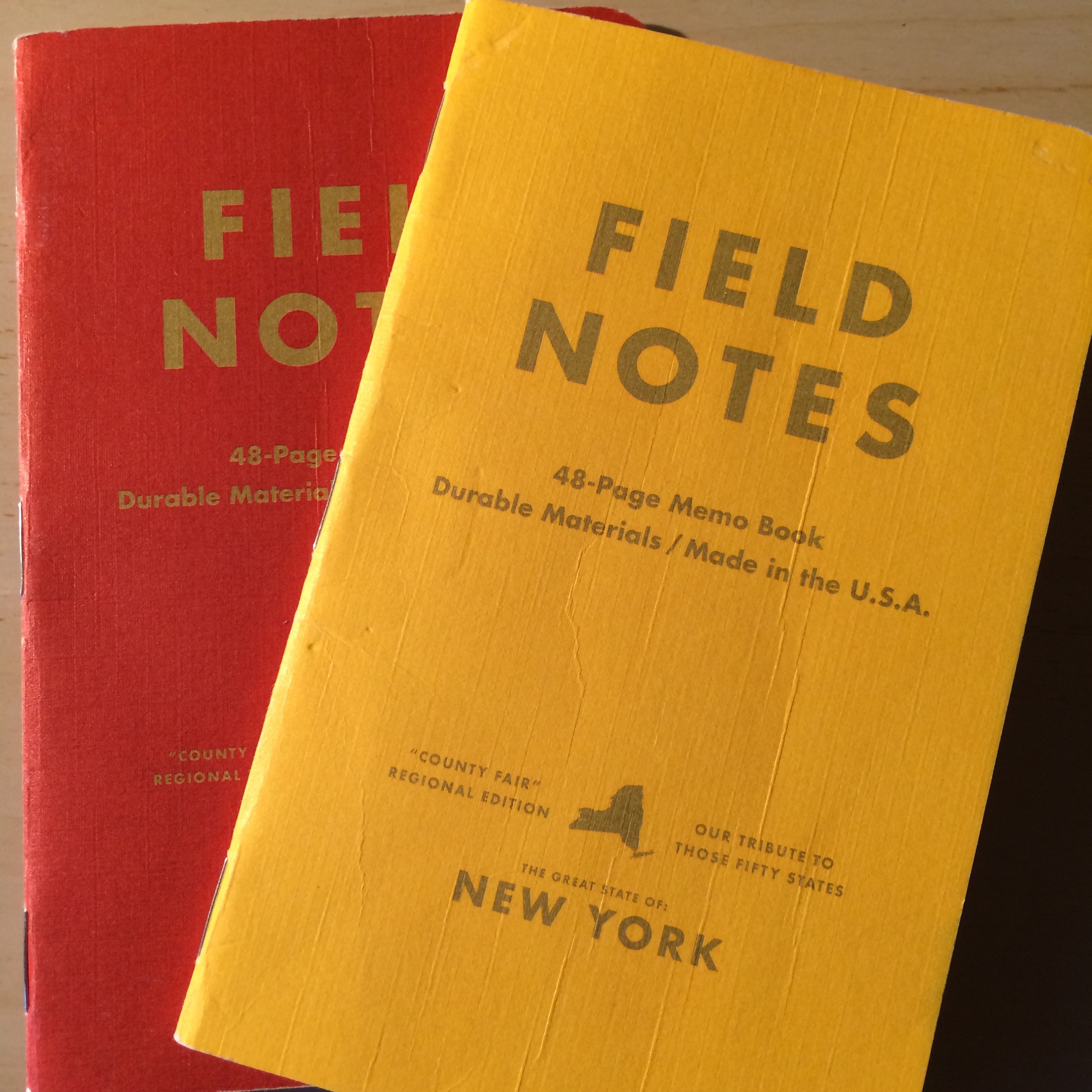
fieldnotes1. Keep a notebook. Capture your ideas somewhere safe so you don’t have to keep them in your head. Then they’ll always be there waiting for you when you need them.

2. Plan your next project before you finish your current one. In those quiet times, those moments when you find yourself twiddling your thumbs, think about what you want your next project to be and outline what next actions you’ll be taking on it. That removes the panic of having to come up with something spur of the moment.

3. Be realistic with your scheduling. Each project will be different, but each one will also take a lot of hard work. Be kind to yourself and allow yourself adequate time when planning your project. Don’t be too generous though. You want to have enough tension there to motivate you to do something, rather than having the psychological freedom to continually defer it until next week. Be sensible, but also give yourself a deadline. Even self-imposed ones carry a punch when you keep a reminder of them where you can see them.

So that’s what I’ll be doing. The first draft of the next Teddie McKay novel is nearly complete and I’m going to be working through that for the next few months. My goal is to publish it in September, so that is the deadline keeping me on track. Whilst Blood Inheritance may be published, everyone knows that is not the point at which marketing and reader engagement stops. Of course, I’ve already got the next book I’m editing decided and set up to make it easy to start.

So the void of time was relatively short; I’m back to writing again.

Book covers, line edits and pre-order systems

This week has been a busy one pulling out all the stops to make sure everything I needed to do in order to publish Blood Inheritance on May 22nd happens. It has been far from easy, and I’m glad that this initial launch is on kindle only. This means getting the final draft uploaded by a date they specify in advance of the book actually becoming available. Failure to do so means the loss of certain publishing privileges, so that’s something authors need to be aware of before pressing that button.

I did consider making it available across other platforms, but my experience so far is that they are less willing to promote authors who do not come with the backing of a traditional publisher. While I want to keep the two sides of my life separate, that makes things much more difficult than they need to be, but I suppose I can just keep working around the issues until they finally sort themselves out.

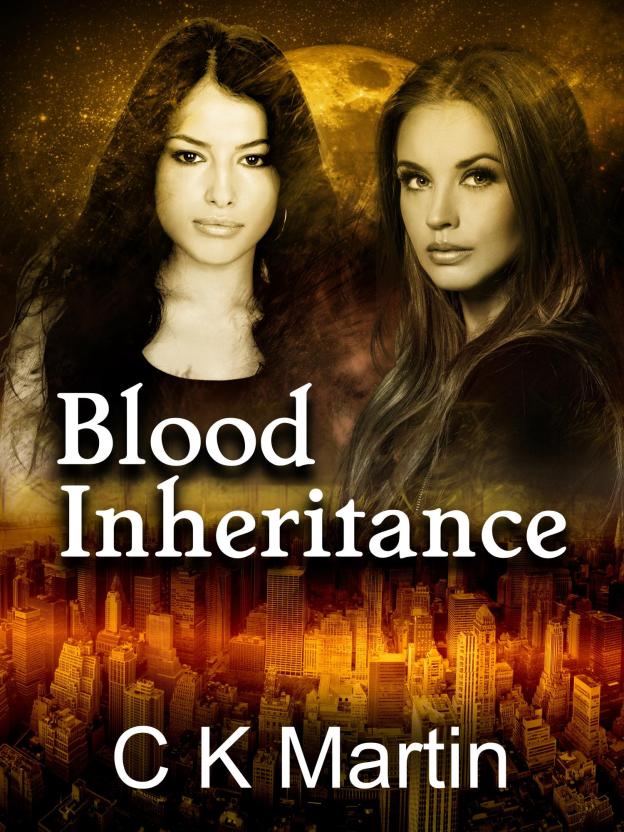
So, without further ado, the final cover design for Blood Inheritance and links!  *drumroll*

Blood Inheritance

Blood Inheritance on Amazon.com

Blood Inheritance on Amazon UK

I’m really excited to be able to share this book with the world. This story is very special to me because it grew out of never finding the urban fantasy book that I wanted to read. One where the female characters weren’t actually all about getting the dark brooding man who they knew they shouldn’t love but did anyway. I wanted to see women stand on their own two feet and work together, especially when everyone would expect them to be bitter rivals. Women, especially on TV (which is the media that most people these days see) don’t support each other, not without being relegated so the ‘supportive best friend’ trope where they have no story of their own. When they do, the shows are runaway successes, but only Shonda Rhimes seems to have picked up on that…

So I wanted action, I wanted vampires and the supernatural, but I didn’t need a woman in leather and impossibly high heels brooding over a bare chested man. Blood Inheritance is the book that starts my two heroines on the journey that is going to be fun, painful and at times bittersweet. But there will be rewards and successes, even at the darkest of times and against all odds.

Feel free to drop me any questions in the comments about the book, or the ups and downs of the publishing process and I’ll be happy to answer them. Thanks again for your support!

C. S. Lewis – Was it the thumb or the rhythm?

C.S Lewis wrote under the pseudonym Clive Hamilton when it came to his poems, something he wished to achieve greatness in. His death was largely unreported because it unfortunately happened on the same day as JFK was assassinated. Oh, and he only had one thumb joint.

I mention that last point because C. S. Lewis never learned to type. That was what I discovered when I was looking at the arguments for and against writing longhand in the age of technology. Some have pointed at the weird thumb goings on as the cause, but it may not be anything as physiological. Instead there is the suggestion it is something much deeper. Something that all of us, as writers, should consider.

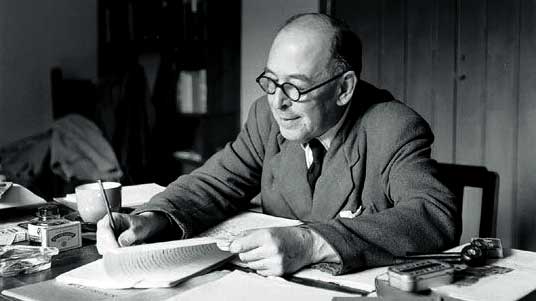
cs lewis writing

He apparently believed that the typewriter could not capture – perhaps even interrupted – the rhythm of writing. There have been many authors since who have followed the same argument; that there is something much more deliberate about writing with a pen and paper than there is on a keyboard. Today especially, when keys are whisper soft and require only the barest of touches, it is easy to pour out the words lightening quick. You don’t even have to press hard or do that thing at the end of the line when the carriage returns with a happy little ‘ding’ sound. Apologies to any younger readers who legitimately have no idea what I’m talking about. You should try and find a good old fashioned typewriter some time.

The pen forces a slowness, a deliberateness; each word can be thought about and selected as the hand forms its predecessor. For many authors today, especially those who are self-published and feel the pressure to release multiple books a year, there is a sense that every word must be captured as quickly as possible, in a format that will then make the movements from first draft to epub as smooth as possible. I would argue that in doing so, we lose not only some of the pleasure of writing, but some of the ability to fully utilise our skills as writers. We have a wealth of words at our disposal, and typing quickly might allow us to use a good one, but it might not allow us the time to choose the best one.


5 books that changed my life

Most people have some books that fundamentally touched their soul in some way. I was discussing this with a friend the other day and it made me wonder what mine were. The list seemed endless at first, so I put some thought into it and distilled it down to five fiction books that had a great impact on me in terms of my writing, if nothing else. It was fun to remember these books again, and I firmly believe they still have the power to impact on people’s lives.

Dracula – Bram Stoker

I was in my teens when I read this for the first time and it was probably my introduction to gothic horror. It was also my introduction to vampires, which have always been my favourite fantasy creature – long before the sparkly kind came and took over the genre. It was a short jump then towards Interview with a vampire and increasingly dark fantasy. It was shortly after this that creatures that go bump in the night started to find their way into my writing. And I wouldn’t have it any other way.

The Poet – Michael Connelly

Michael Connelly is, in my opinion, one of the consistently rewarding authors I know. This was a birthday present which I devoured in almost one sitting the day after. My intention had been to see just what this book was about, and I was instantly gripped. It is a masterpiece in plotting and pace, which is something that Connelly has really mastered right from the beginning. The technology was state of the art at the time, almost fantastical. Strange to think we’ve all got phones a thousand times more powerful now.

The Stand – Stephen King

I’d always assumed Stephen King was ‘horror’. Which is a mistake that most people make, given the fact that Carrie is always talked about in a terrifying way and even to this day you’ll still find all his books in the horror section. The Stand was breathtaking in its scope and I thank the person who forced me to read it on the insistence that it wasn’t ‘scary’. In many ways it was, but not in the ways I’d feared.

The Chronicles of Narnia – C.S. Lewis

Technically more than one book, but I don’t think that I could narrow it down to a single one. I remember many nights under the sheets with a torch, unable to put them down, even though I was supposed to be asleep. Reading in the summer months was the best, when being packed off to bed before 8 meant another two hours of sufficient light to read by. I don’t think I stayed up as late as it felt most times, but every word was worth it regardless. These books first gave me the permission to imagine different worlds and beings, as well as an underlying sense of what was right and wrong.

The Eyre Affair – Jasper Fforde

This book is impossible to explain if you haven’t read it. If, for some reason, you haven’t but you love books, then you owe it to yourself to read this. I’d hit a wall with my reading when this was given to me, and I found myself drawn into the crazy world where books are more important than pretty much everything else. Check your reality at the door and embrace the suspension of disbelief.

So, that’s my top five. I would imagine most people will have read at least one of them, maybe them all (congratulations if you have – your mindset is the same as mine!), but if you haven’t then give them a go. Escape the world for a little while, reality is overrated anyway…

Do you plan your writing, or do you just wing it?

One of my key strategies to write books whilst holding down a 40+ hour a week bill-paying job, travel, and juggling family commitments, is to make sure my writing is planned in advance to sitting down in front of the laptop first thing in the morning.

I know that I don’t come up with ideas at that time in the morning, especially when I’m on the road. Likewise, for a lot of people who are more creative in the evenings, much of the ability to focus on the detail has already been drained out of our brains by the time we get that alone time to begin our writing.

Yet the debate still rages about whether or not to plan your book in advance of writing it, or to allow it to be a truly creative endeavour, flowing from your brain as the muses come to you, without one iota of reference material to refer to.

I suspect, for those who are adamantly non-planners, there is still a degree of preparation that takes place. Even if it is the development of a character profile, or a key theme you want to put across. Perhaps you already know that one crucial plot point that you want to include that you know will provide a massive payoff in drama and tension. You may not have done a scene by scene account, but there is something you’ve already committed to making happen.

I’ve also heard it said that people gravitate more towards planning when they stop writing for fun, or as a hobby, and move to writing that has deadlines. I can believe that. Sitting around and waiting to be inspired just isn’t going to cut it when your publisher is demanding you return that advance. For self-publishing authors, once you’ve committed to doing it, the deadlines are self-imposed, but they are just as real.

I’m moving through this journey of being an Indie author, with side plans to take the novel part of my writing down the traditional publishing route also. When I find things I believe are useful and can help other people, I want to be able to share them here. But a lot of those things will involve planning and discovery. I’m intrigued to know if those are likely to be of interest to you, or if you’d be more interested in reading about more spontaneous approaches to creativity.

So are you a planner or a do you like to fly by the seat of your pants? Take my short survey (just 4 easy questions I promise) and let me know. Alternatively, feel free to drop me your thoughts in the comments!