Tag Archives: project manager

Cover Reveal! A Taste To Die For

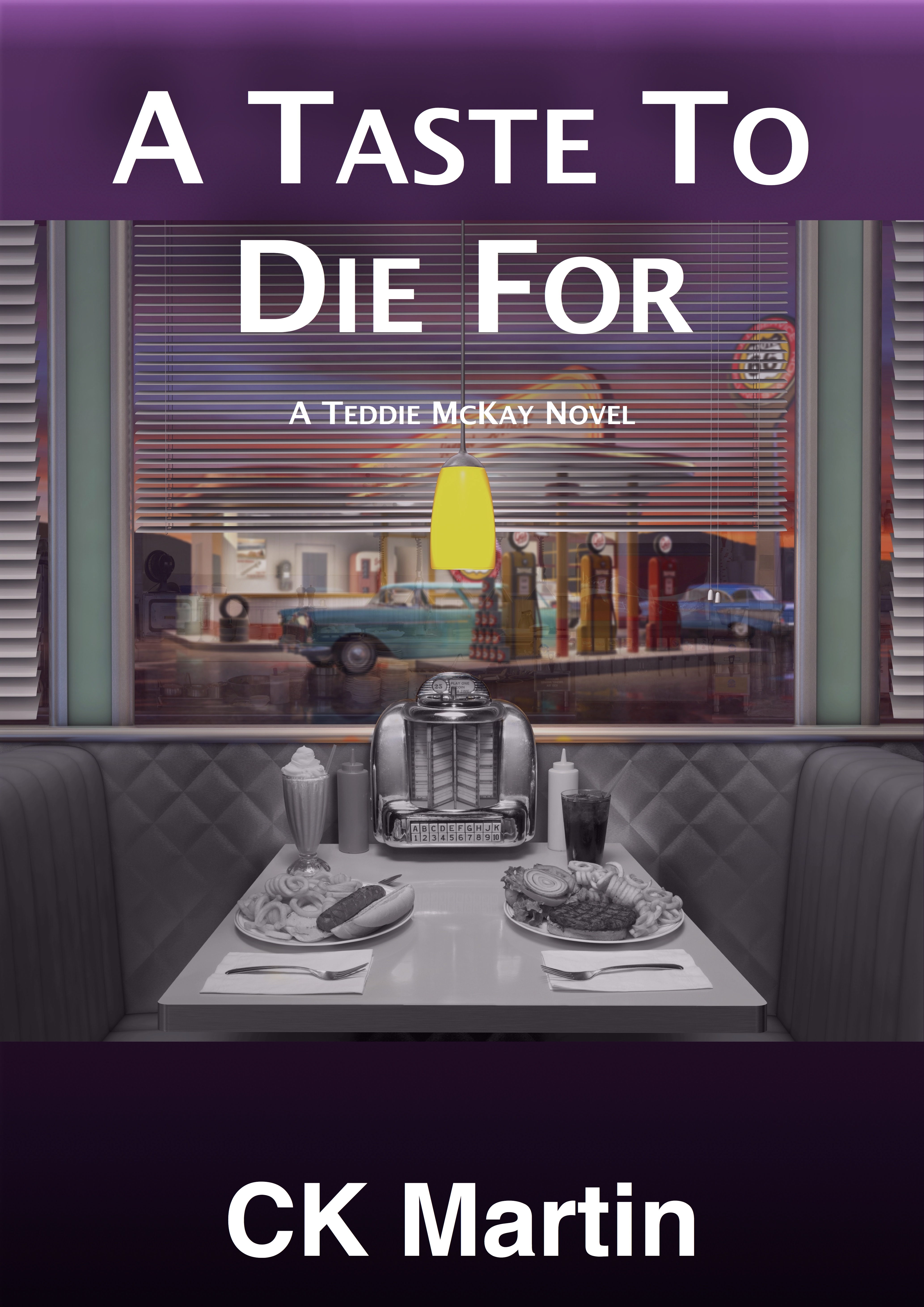
This is a moment I’ve been looking forward to sharing for absolutely ages. It’s time to reveal the cover of my next novel, A Taste To Die For, the second book in the Teddie McKay series. Without further ado, here it is!

A Taste To Die ForThere is so much I love about this cover. It is a bit brighter than the one for The Crochet Killer, which is just fine. This book itself is lighter in many ways, so that reflects it well. Yet, right there at the bottom, there is that hint of darkness.

I’ve made it no secret that the cover is my least favourite part of the indie publishing side of things. I prefer when someone else comes up with the visual concept. Despite my love of words, I struggle to get the artistic description across when I want a cover made for me. This one has turned out almost exactly as I had envisaged it, with minimal effort. Which is just the way I like things. It allows me to focus on the writing side of life, which is much more preferable.

So why A Taste To Die For? Let’s just say, this book has a food theme. The die for bit should be fairly self explanatory, with it being a crime book and all.

Now it’s just three more days until publication! Then I’ll be sitting back with a large glass of merlot and celebrating another book leaving home. It’s the end of the summer, after all.


Being a writing road warrior

It’s no secret that I spend a lot of time on the road. I also spend a lot of time writing. There is a real art to balancing the two and so I thought it would be a good time to do a short post on how to make this as easy as possible. Because that is what life is about really. Getting as much as possible with the smallest amount of effort.

I am a serious fan of quick wins. I accidentally typed quick wines, which I guess also applies, but I’ll save those for another post.

This itself will be short and sweet and divided into two sections: principles and tools.

There are a couple of principles that I always keep in mind when I am on the road. Most of these are based on a GTD style system. I’ve found that this is the best way to make sure that I can continue to make progress even in the toughest of circumstances.

Firstly, it helps to always know exactly what you have to do. It doesn’t matter if you capture this in a list, or a calendar, or an app that can add all the whistles and bells that make you feel good. The only definite element is that it needs to be stored somewhere other than your head. The key is to knowing, in that moment when you have thirty minutes to spare, exactly what it is that you need to do. No additional thinking required that causes you to instantly lose ten of those thirty minutes before you even begin.

Secondly, when you have those creative thoughts, you have to have somewhere to capture them. Mark my words, the biggest and best ideas will always come at the most inopportune moments. That is just the way the universe works. Again, it doesn’t matter what you use to do it.  You just have to make sure that you’re not trying to remember it over and over again until you get back to your computer and start working on it.

Thirdly, make sure your travelling setup resembles your static setup as best as possible. I do this by making sure I have devices that all sync and everything goes via dropbox. When I sit down to work in a hotel room, I want to make sure I can remove the friction as much as possible. It needs to feel natural, not a pain to even get going.

Lastly, try to stick to your routines as much as possible too. If you have a morning routine, like I do, try not to let it all go to hell just because you’re not sleeping in your own bed. If exercise is part of your routine before you write, then remember to pack your gym clothes and try to pick your hotel around its facilities. It all sounds a bit serious, but the payoff in terms of quality time getting the words down is enormous.

That’s it for the principles, so let’s move onto tools. Whilst I think the tips above can apply to everyone (and not just to writing, but to anything else that you try to maintain on the road), tools are particularly subjective. I’ll just tell you what works for me and hope that it gives you some ideas.

For tracking what I need to do with my writing, I use an app called Nozbe. This allows me to break down what I need to do into categories, projects, contexts etc, so I can instantly know what task best fits my current surroundings and time available.

For capturing ideas, to me there is nothing better than a notebook and pen. I keep a small pocket notebook with me and a fisher space pen, because that means I can write on a plane without the fear of an ink explosion rendering my journey utterly miserable. It’s nice and compact too, so it can just get shoved in my pocket if I need to be truly mobile.

It’s a shame Scrivener doesn’t make a mobile app, otherwise I could use it on my iPad in the same way I use it on my macbook. For everything else, I use an iPad with a bluetooth keyboard to remain as portable and functional as possible. As soon as there is a Scrivener iPad app, I’ll probably even buy a new iPad to go with it. Yes, I love Scrivener that much.

I know that I could probably have a multitude of other things. It’s not about being perfect, it’s about having what you need in as few items as possible. After all, you don’t want to be weighed down while travelling as that will impact on the areas outside the sphere of writing.

Of course, there is one other ‘must have’ item that I’ve failed to mention so far. On the road or curled up at home, a writer just has to have coffee…
 

Finishing – It’s Always The Hard Part

This is no ‘how to’ post. You won’t find any handy tips and tricks here. This is just me talking about how finishing is always the most important part of a novel, and that probably makes it the hardest.

As with writing, the same applies with life. The best things are the hardest won. The sense of satisfaction is the most rewarding. Yadda eider eider. Right now, the words ‘The End’ seem to be a moving target. Moving, apparently, further and further into the distance.

Writing is my hobby, my passion, my love. It is also my business. Therefore, it has schedules and deadlines and project plans, just like everything else. True, it may be rooted in creativity and dreams, but as anyone will tell you, it’s hard work that gets you over the line. There is no fantasy lottery win that will free me up to write in that luxury beach villa. Or the cabin on the lake. Insert your location of choice here, alongside whatever your dreams and goals are.

So, logic tells me it will be worth it. However, the child in me wants to stamp my feet and demand to know why my characters are refusing to play ball and be written according to the ideas I had originally. I knew what I needed to write to create the follow up to The Crochet Killer. While I know the new direction will all work out better in the end, it doesn’t stop things from being as frustrating as hell now!

So, when you’re reading this, I sincerely hope you’re having better luck than I am on finishing your dream project! If not, then we can carry on battling through it together!

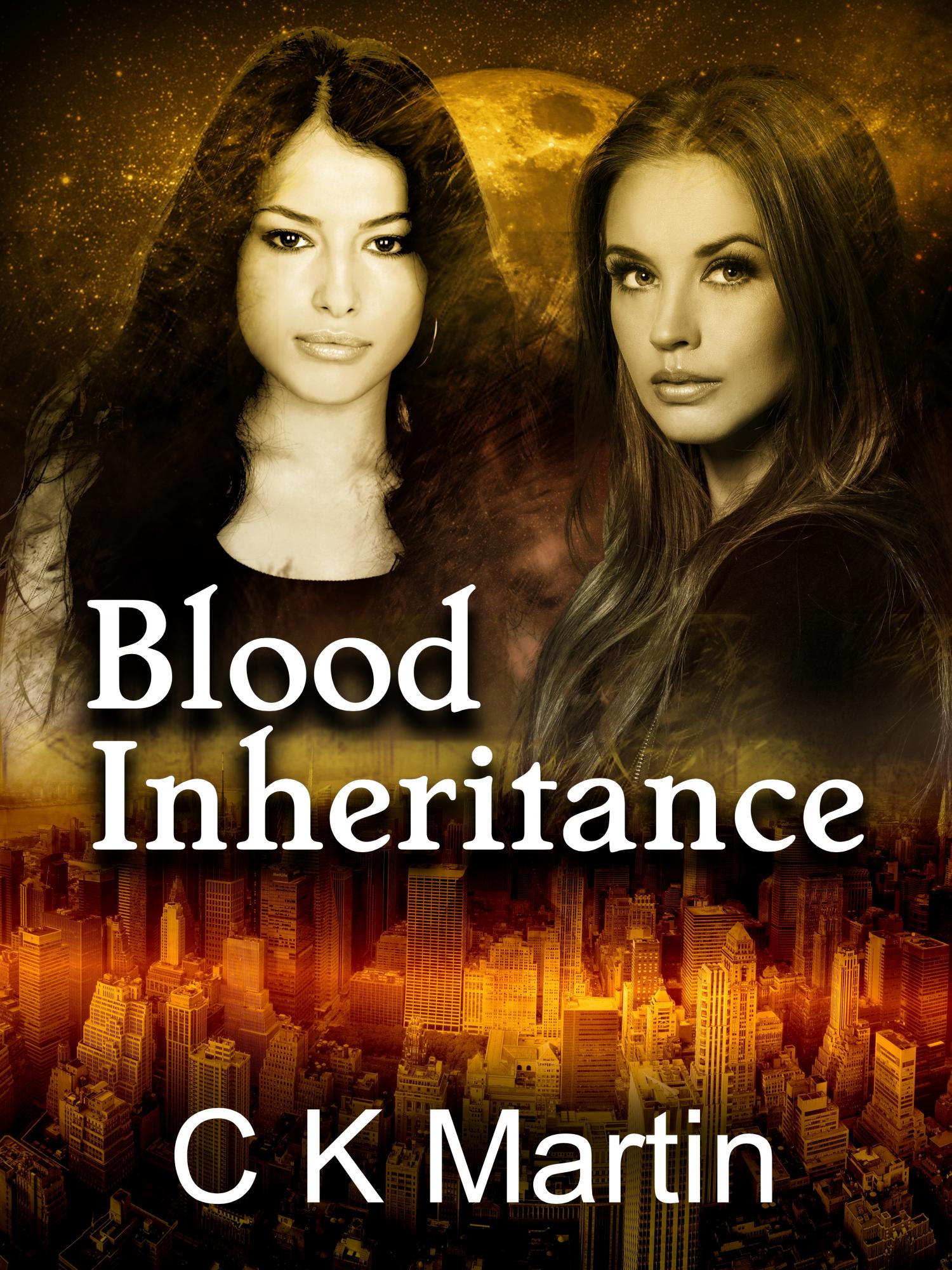
Blood Inheritance

And if you want to read something I did manage to complete, then Blood Inheritance has been released on Amazon. Go grab yourself a copy and make me feel like this is all worthwhile!*


*shameless plug and plea. A writer’s first draft despair knows no bounds.

Writing and motivation: keeping the momentum going

I find the long weekend has been perfect for a little bit of extra introspection time.

I’ve spent the past few months building up to publishing Blood Inheritance, with the crazy planning and scheduling that goes with such a big endeavour. I say that because we should not belittle our achievements. I am terrible at taking time out to celebrate when I hit my goals. I’ve been talking about getting this book out there for the best part of two years, so I’m allowed to high five myself for being brave and letting one of my babies fly the nest.

The downside in achieving something that has taken up so much of your time and attention for months is that after the excitement fades, then there is a moment when you realise the enormity of the void it has left behind. Instead of breathing a sigh of relief that you have now got so many hours of your life back each week, you sense the loss. There is only one thing to do.

You have to keep going.

There will always be another book brewing on the horizon. There will always be an idea to be captured and the seed of the idea planted so it can grow. Writing tasks will never disappear completely, but neither will the joy of those first moments of creation. So when the sigh of relief wears off and I begin to think about that sudden free time, it’s always good to know that I have several projects I can dip into.

It is good to take a break. It is good to allow yourself to recharge. It is not good to allow that to turn into sloppiness and complacency. So how do you avoid it? It’s quite simple really.

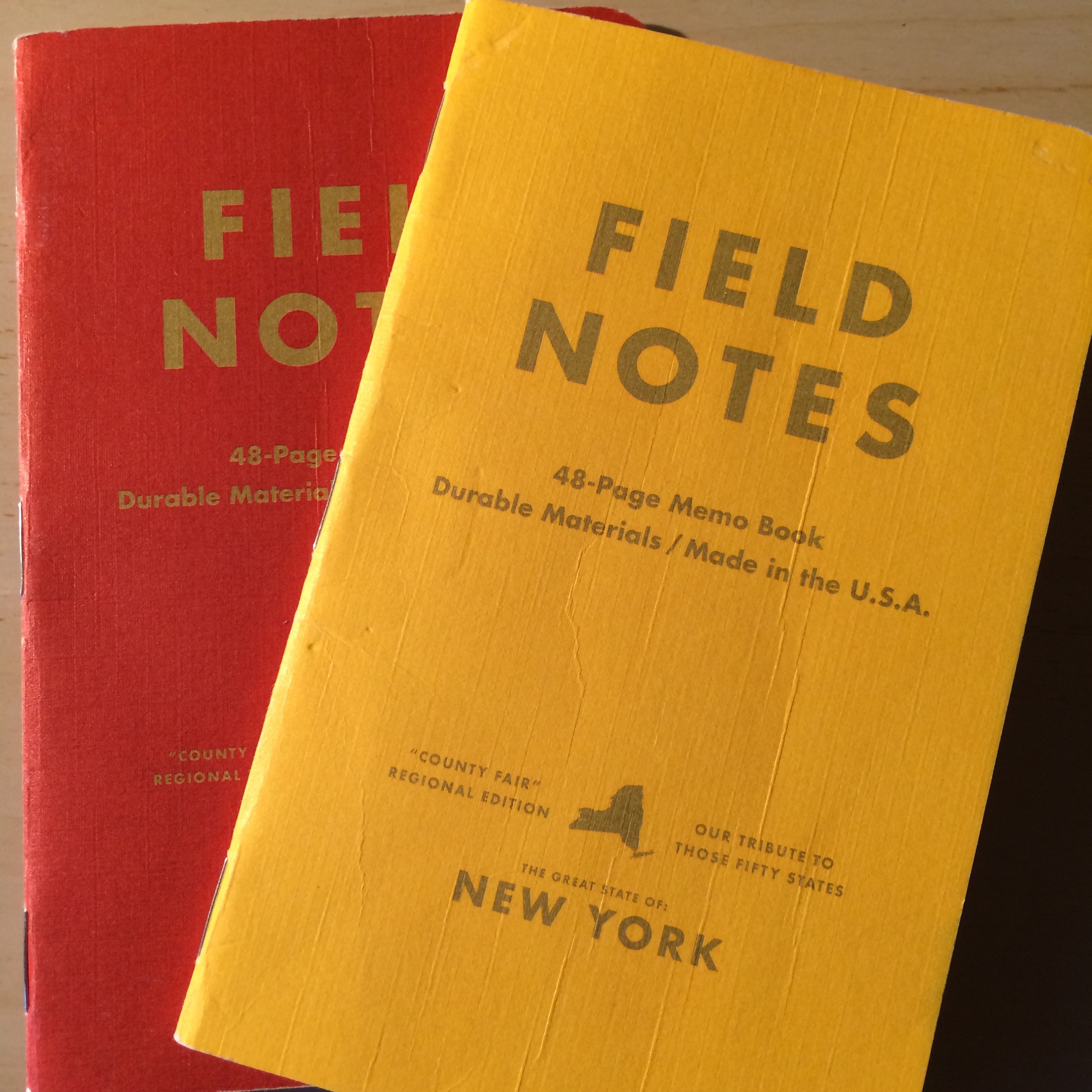
fieldnotes1. Keep a notebook. Capture your ideas somewhere safe so you don’t have to keep them in your head. Then they’ll always be there waiting for you when you need them.

2. Plan your next project before you finish your current one. In those quiet times, those moments when you find yourself twiddling your thumbs, think about what you want your next project to be and outline what next actions you’ll be taking on it. That removes the panic of having to come up with something spur of the moment.

3. Be realistic with your scheduling. Each project will be different, but each one will also take a lot of hard work. Be kind to yourself and allow yourself adequate time when planning your project. Don’t be too generous though. You want to have enough tension there to motivate you to do something, rather than having the psychological freedom to continually defer it until next week. Be sensible, but also give yourself a deadline. Even self-imposed ones carry a punch when you keep a reminder of them where you can see them.

So that’s what I’ll be doing. The first draft of the next Teddie McKay novel is nearly complete and I’m going to be working through that for the next few months. My goal is to publish it in September, so that is the deadline keeping me on track. Whilst Blood Inheritance may be published, everyone knows that is not the point at which marketing and reader engagement stops. Of course, I’ve already got the next book I’m editing decided and set up to make it easy to start.

So the void of time was relatively short; I’m back to writing again.

Independent authors – how much content should you create?

It started with a simple question: ‘How many books do self-published authors write per year?’

It seems as though there are varying opinions on this. But it seems safe to say that the traditional publishing model of one book a year, perhaps one book every two years, just isn’t going to cut it any more. The number of titles an independent author can release is the one advantage they have over the traditional publishing houses. The amount of gears involved in getting a book through the publishing mill means that most tradpub authors will be doing one book a year. Prolific ones can do two.

Some independent authors are releasing between six and ten titles a year. Two is probably considered the very minimum. It’s easy to see why. In those first days of publishing your title, there is a surge – maybe into the heady heights of double digit sales (I’m just being honest and realistic here). The best way to ride the wave is to have another book – assuming you’ve wowed your reader – for them to jump right onto the back of. The more titles you can have for them to select from, the more chance there is of them seeing something they like. They’re also more likely to see you as committed; a ‘proper’ author writing books for a living. Which may or may not be true.

Welcome to this century – where perception is everything.

I started this year with a plan to self publish two books. That seemed reasonable. Now, some days, it does not seem like enough. I will be trying instead to release three full length novels, but with one big caveat:

I don’t want to compromise on quality.

Now, I’m not saying I’m going to be churning out three literary masterpieces a year. If only.

The simple reality is that there still needs to be a certain level of quality if you expect people to go on to make that next purchase. Even traditionally published ebooks seem more prone to formatting errors than good old paper ones. Nothing is going to be one hundred per cent, because humans are involved. Pesky, pesky humans.

It still needs to make the reader feel like they haven’t just forked out their hard earned cash for something that has been churned out and not even run through spell check first. They especially don’t want to feel scammed because that first ten per cent they’ve downloaded as a free sample was markedly better quality than the rest of the book.

So a minimum of two books, of an acceptable quality.

If possible, then a novella or two also doesn’t hurt. One thing I would suggest – something I’ve learned the hard way – is to make sure that short pieces are consistent with your novels. If not, it can be confusing and off-putting for the reader. I’ll hold my hand up to making that mistake and can simply do my best to rectify it over time as I publish more.

If you’ve yet to publish anything then I’m sure the above seems like a daunting task. Six months ago, I felt the same way. Take comfort in the knowledge that it is the first of anything that is the hardest. Once you’ve wrangled with the various platforms and requirements, had your editors make demands yet again (even friends beta-reading it for you as a favour will have demands), and agonised over your cover design, it becomes easier each time to press ‘publish’.

Do you think two books is enough? Or does it need to be more? Or is quality more important than quantity every single time?

Writing update: new fantasy series

When I started this blog, I thought my first released novel would be from my urban fantasy series. Somehow that didn’t happen, and instead The Crochet Killer, a crime thriller, was released into the wild.

That doesn’t mean the fantasy series has stopped, or that it will not see the light of day. Far from it. While I am writing book two of the Teddie McKay series, I’m still editing books one and two of the urban fantasy series.

It’s not easy. My characters are very different across the books, and keeping all the voices in my head during intense periods of writing and editing is tough. It’s also fun. A lot of fun.

I love the urban fantasy series enough that the first three books are already written, and the next two already plotted out in granular detail. In some ways, that makes me glad that they’re not the first eBooks I independently publish. Let’s face it, you’re never going to be perfect at something the first time you do it. You can study and research the detail of ‘how to’ as much as you like, but at some point you just have to get it out there. Make mistakes, learn from them, do it better next time.

Things like advance promotion, pre-sales and sending copies off for review before release were all things that seemed like a step too far for me. Getting it released was the main thing. It’s often like that when you do something for the first time; you can only really focus on one task. The more experienced you get, the more you can take advantages of the nuances of the skill, no matter what it is.

That said, I’m getting quite excited about getting everything together. I hope to publish three books this year, which wouldn’t be a bad start. I want to entertain, inform and create characters that aren’t mainstream.

That’s not a bad ambition to have.

Setting up a new project in Scrivener

Now my first full length novel has been out for a month, it is time to turn my attention to writing the sequel. I’m a plotter and a planner, which is why I absolutely adore Scrivener. I can hand on heart say it is the best software investment I have ever made.

Here’s why. I can control everything I need, all in one place.

My characters

I love the character template feature. As Teddie McKay is back again for a second instalment, I can just copy the template from The Crochet Killer straight into the new setup and we’re good to go:

Characters


I can just update them with any new information, such as internal or external conflicts, character development and move on, knowing that the information will be there for me if I need to reference it. No scrabbling through notebooks to see if that tattoo was of a dolphin or a unicorn.

The cork board

This is a huge benefit if you’re a plotter like me. I have all my scenes planned out, then I can put them together in cork board view. Like a real cork board, I can see the overall picture in one place, and move around anything I need.

Cork board

So here, for example, I’m not sure opening with the restaurant scene is dynamic enough. Each index card is tied to the scene itself, so if it’s not in the right place once it’s written, I can just move the index card and the scene within the manuscript will automatically move with it. Genius.

Name generator

This is a key feature that sets Scrivener above most word processing apps. When a book appears, the main characters usually bring with them a name. They’re not the ones you have to worry about. It’s when the secretary pops his head around the door to deliver some information and the protagonist says ‘Thank you -‘ and you don’t have that one-off name. Instead of agonising, or inserting ‘Secretary’s name here’, you can just pop up the word generator, set as much or as little background info as you like, and away you go!

Name generator


I think Hamish is a great name for a secretary…


Putting it all into Scrivener makes it real. It also removes any friction, so I don’t get distracted from the actual process. Once the detail has been loaded, it’s just down to the best and most exciting part of all.

Writing.

You can purchase, or find out more about Scrivener here.

To find out why they are meeting in the restaurant in that first (or maybe later!) scene, read The Crochet Killer on kindle, or Kobo.

Crochet Killer Cover

(also available on Nook and through the iBooks store)

Why I’m planning to eat healthier this month

January is always the month that gets the best of people’s good intentions. In reality, my health has been on the back burner in January, for many reasons. Instead, February is the month that is going to get the most of my intentions when it comes to health. Why? Because my writing has both benefited and suffered from the lack of good diet during January.

Not worrying about food has helped me get The Crochet Killer published and over the line. Getting all the input I needed, putting the last pieces together, that requires a lot of time and chasing. Time that can be made up from easy food choices of the kind that require zero thought.

Unfortunately, that is only a short term solution. I have had the time and the motivation for that quick burst, but now I enter the first Monday of February feeling sluggish and displaced. I can feel the weight of a thousand chips settling somewhere just below my belly button.

And above it, if we’re being entirely honest.

Food is important. Life is important. The only way to achieve as much as possible (I initially wrote ‘achieve it all’ but have come to realise that is a modern myth), is by being as holistic as the tools you have available allow you to be.

My writing and travel schedules in February are going to be punishing. Which is why I would encourage everyone who is out there in the same position – with a full life and plenty of challenges – to still dedicate time to getting their health and wellbeing in place.

Because writing is nothing if you’re either too tired or dead to do anything with it.


Things Not To Love: Marketing

For some authors, self-promotion seems to be their strength. If they have any doubts about the quality of their work, then they sure as hell don’t show it. You’d think they’d written the book for all time in the way they talk about their middle of the road thriller. If I sound jealous, it’s because I am. Not because I want to write middle of the road anything, but because I want to be able to have that level of confidence and self-assuredness about a product that has gone through the quality control I have chosen for it, not the route that industry experience diehards would have picked instead. But for that to be the case, I’d have to be a different person. Probably American.

I recently read an article called How to Reach More Readers by Harnessing Retailers’ Algorithms by Simon Denman. I think the opening that caught my eye was the line Most authors I know enjoy marketing about as much as filing tax returns, and my first thought was ‘that much?’. But the article itself posed some interesting theories about how marketing and promotion now work in an internet based age. Bookstores don’t really have algorithms. For a good long time they’ve had experienced professionals who would be able to guess how many copies would shift based on their local demographic and retail location, but I strongly suspect that is now a growing art.

Algorithm

It leaves me to question then, how many of the best selling self published authors are doing this kind of thing? I know that with my daily life, I’m not sure I have time to work out algorithm selling strategies, even if I was at that point in the journey. It’s no secret that I’m just starting out on this road, with a couple of books queued up but still in the final stages of edit and cover design. Whilst I look forward very much to the satisfaction of getting them out there, the prospect of marketing is bad enough without having to factor in scheduling a three day continuous upswing in sales to trigger some piece of maths somewhere in the amazon superbrain.

So is it luck or strategy? And does anyone know of a guaranteed way to do it without requiring some kind of advanced calculus…?

Fixed Schedule Writing On A Fluid Travel Plan

It’s no great secret that I don’t spend all day, every day in one place. Travel is my passion, my way of recharging, my way of getting the most out of my writing. I love the newness of it all.

I love the sun.

So whilst that makes me sound like the committed adventurer who lives some kind of scattered life, the one thing I value above all else is routine in my writing. These things, sadly, do not seem to mix very well.

Some days I’ll be writing from my home desk, other days it will be a hotel room. Increasingly I am finding myself fond of knocking out a few hundred words in a coffee shop by hand. Regardless, it means that some of the rigidity in my schedule that I require to actually 1) produce material, 2) stay sane, is becoming more difficult to maintain. My output, unfortunately, has drifted off a little and I need to find a way to get it back.

Solutions

A couple of things have started to help get this back on track:

Being honest about my energy: If travel commitments mean a late night and exhaustion one day, getting up an hour later should be allowed. This doesn’t always work for me though, so I’ve found that getting up and focussing on more routine tasks, like website maintenance and reading articles, is a better way to get those tasks off my list that I would usually do at the end of the day or weekends.

Write when I don’t feel like it: I prefer to do creative tasks first thing in the morning when everyone else is asleep. When that’s not possible, as above, it means either stuff doesn’t get written or I make myself do it later in the day. It’s still all about carving out time. As this isn’t my naturally creative time, that means spending more time in places that do add a spark of inspiration. Hence the increase in coffee shop exploits.

Becoming better at taking notes: If I’m on the road, with a mixed up schedule, ideas come to me at odd times. Flashes of inspiration or sentences that I know will one day become the start of something bigger. I’m trying to make sure that these always get captured in a notebook so I can dig them back out when the right time comes.

So that’s what I’m trying to achieve. Creating some kind of balance in a crazy world. I feel like I’m still grasping the basics of this, so I’m totally open to new ideas and suggestions if there is something working for you?