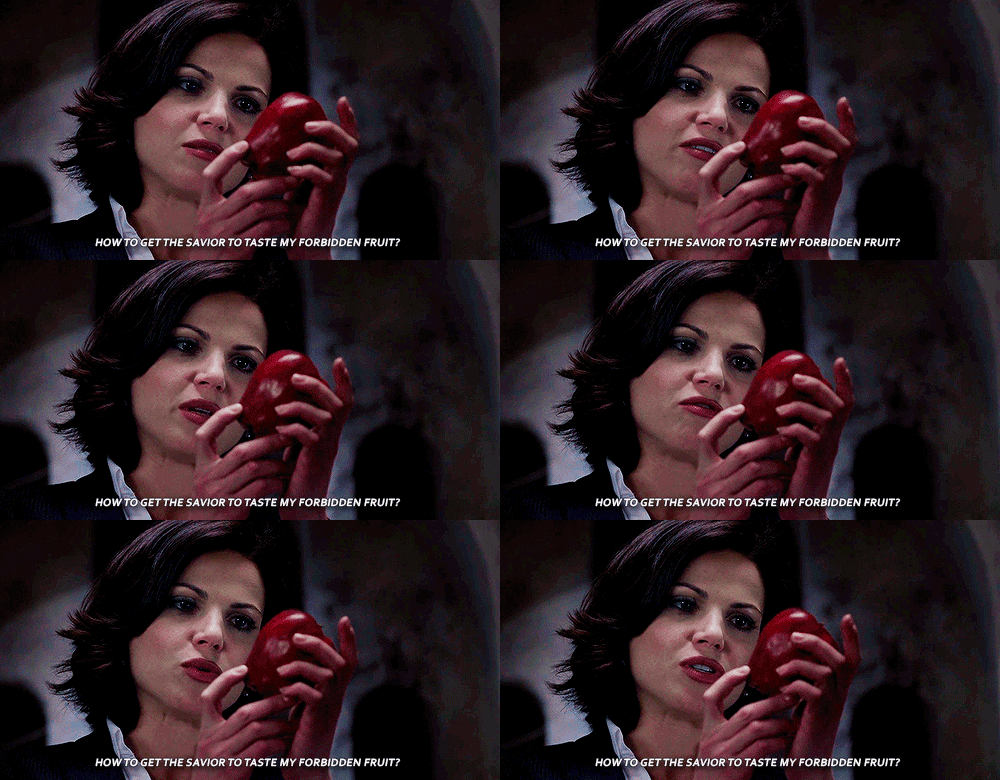
This blogpost came out of a conversation with a friend about how badly diversity is handled by some media. Whether in TV, movies or books, there are shining examples and there are terrible examples. Although the conversation was about diversity in general, it was the the fine line between subtext and queerbaiting that seemed the most blurred.
Firstly, whilst subtext can mean all manner of implied content, for the purpose of this post I’m just using it in a sexual / sexuality way. After all, subtext as a technique is essential in all art mediums, otherwise there would be only explicitly stated events. And that would be no fun at all.
Firstly, let’s get some definitions going. Not mine, but stolen from the internet as generally accepted understandings:
Subtext is content underneath the dialogue. Under dialogue, there can be conflict, anger, competition, pride, showing off, or other implicit ideas and emotions. Subtext is the unspoken thoughts and motives of characters—what they really think and believe.
For me, whenever I heard the term queerbaiting, it always seemed to be in anger or thrown around without much thought to what it actually means. So I turned to Wikipedia to found out (if it’s on Wikipedia then it must be true, right?)
Queerbaiting is what happens “when people in the media (usually television/movies) add homoerotic tension between two characters to attract more liberal and queer viewers with the indication of them not ever getting together for real in the show/book/movie”
Now, one of these things sounds significantly worse than the other. One seems normal writing technique, the other seems malicious and cruel. But in the context of sexuality specifically, I’m not sure the difference between the two is as great as it seems. Stick with me here. Because (and I’m going to pull from TV for a second, rather than books), since the late 90s, we see very little has changed. Subtext was the source of great joy in the early days, queerbaiting a source of great anger now. But compare two shows, one from now and the other from back then, and other than the bad hair there is probably very little difference.
It is expectations that have changed. And rightly so.
It used to be that queer audiences were glad for anything they could get. In a world of terrible TV stereotyping, or gays that were essentially called that but were portrayed in a nice, safe, asexual way, some tense subtext between two characters was something to enjoy. A long, soulful glance could launch a thousand fanfics. It still can.
But queer viewers (and generally liberal viewers of all sexualities) no longer expect to be grateful for having someone throw them a bone. Fully rounded queer characters have been portrayed on TV, and in a world where gay marriages are increasing becoming enshrined in law and general social acceptance, it seems almost ludicrous that obvious sexual tension between two characters of the same sex wouldn’t lead to more. Why? Because in the real world, it would.
In the real world, when there is a smouldering sexual tension between two parties, it eventually explodes into something more. Generally after a bottle of tequila. Either that or it becomes confessed to a best friend after a bottle of tequila. Two things remain truth: acknowledgement of said tension and tequila.
The reality is the majority of TV is still written and devised by straight white middle class men. Usually American. Subtext was fine before, so why is it not now? I suspect there is a general mentality of let’s throw this in for the gays, they’ll love it, and then general confusion when they don’t. A lack of understanding of why, in 2015, they might just feel cheated and annoyed. Homosexual self-worth has increased ten-fold and those who have come out the other side of social shame are pulling the teenagers who are struggling right up there with them. Being reliant on subtext feels like going back in the closet, like becoming second class citizens again.
As a writer, I still love me some subtext. I love the freedom it gives for people to create their own imagined ships, whilst understanding that it may not work with the overall intention of the narrative. I completely get that, I really do. Likewise, I love the slow burn of subtext between two characters regardless of sexuality. Castle and Beckett holding out against each other for as long as they did made the payoff even greater. I’d like to think that audiences are smart enough to spot when that’s the case.
The art is understanding the line and knowing when you are about to cross the threshold. When the move goes from fun to offensive. Back to TV – shows like Rizzoli and Isles have come very close to crossing that line, without spilling over into the fury that has been seen with Once Upon A Time. Two very different shows, handled in two very different ways. One is a light-hearted detective show that is only one step up from Diagnosis Murder in its case complexity, with two female leads who are outstanding in their respective fields. It does not frame itself in any other way.
Once, by contrast, sets itself up for confusion: a re-telling of fairy tales (already pretty dark if we’re honest), whilst remaining a family show. It would be hard to reconcile those things at the best of times, but with an almost exclusively white, strongly heterocentric character list who do despicable and brutal things, it fails at both. Creating a convoluted family tree does not equate to a re-telling. Murder does not equate to a family show. Having your characters say one thing but behave in a way that is classic subtext, is no longer ‘just fun’ within the parameters the show has set for itself.
The world has come a long way. I guess that is the key concept I have reached in all of this. That subtext is fine, but context is key. Like all art, at the grand finale, the audience expects a payoff. Books have it much easier, allowing the audience to be privy to the innermost thoughts of the character. TV and movies have to convey much more to compensate for that. It requires a great script, great directing and great acting ability. But people have a right to vote with their fingers: to close the book or to turn off the TV.
People have a right to not enjoy it when something they identify with is being used as a fun plaything for someone else. They have a right to say so. Eventually the world will change more. Eventually, I hope, this blog post will be laughably obsolete as people no longer have to fight for entertainment that is ethnically, socially, sexually diverse. Oh, and don’t forget gender. Wouldn’t it be nice for the virgin/whore trope to be gone forever?
Feel free to agree or disagree, but politeness only in the comments section please!

 C.K. Martin / Cas Martin